

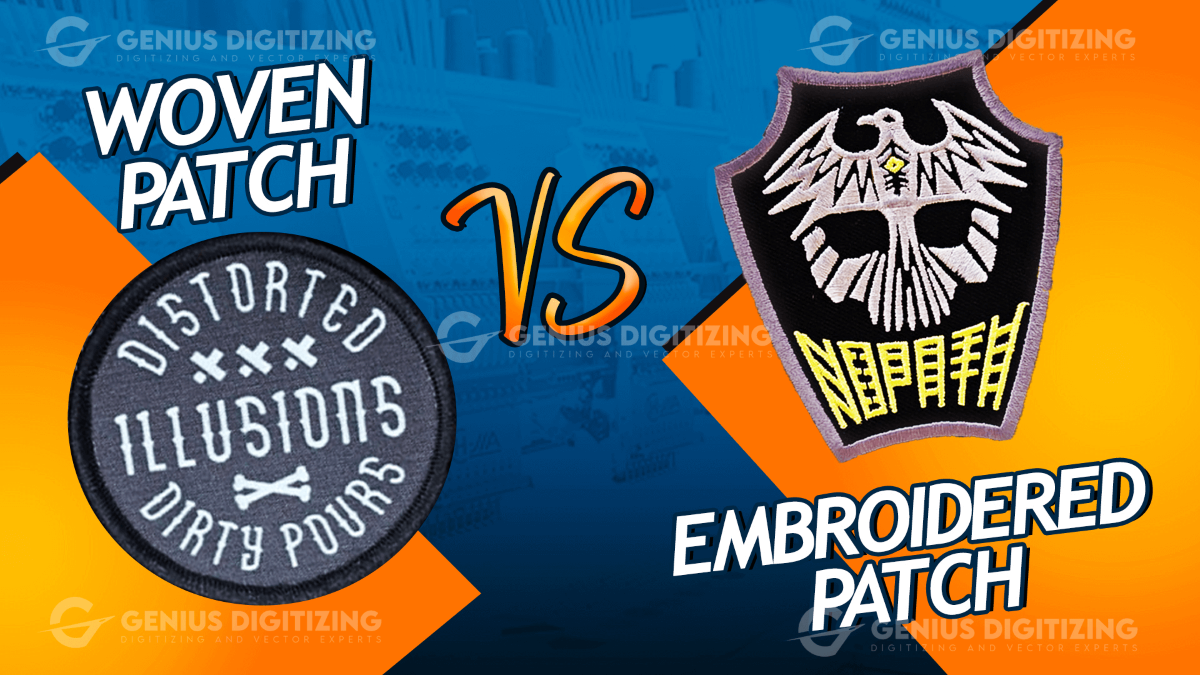
What are embroidered patches, and what do they look like?
Embroidered patches are made by stitching thicker threads into a raised design on a fabric base. They look textured, bold, and slightly 3D, which helps logos and simple icons stand out from a distance.
In the embroidered vs woven custom patches debate, embroidery is often chosen when they want a classic “badge” feel and strong visual presence on uniforms, jackets, and hats.
What are woven patches, and what do they look like?
Woven patches are made by weaving thinner threads together, which creates a flatter surface and sharper lines. They feel smoother to the touch and can reproduce small text and fine details more clearly.
When comparing embroidered vs woven custom patches, weaving is usually better for intricate designs, gradients, tiny lettering, and clean edges that would get lost in thicker embroidery thread.
How do embroidered vs woven custom patches differ in detail and readability?
Woven patches typically win on detail because their threads are finer, letting them render tight curves and small fonts cleanly. Embroidered patches can simplify fine elements because thicker stitching can “fill in” small gaps.
In embroidered vs woven custom patches, they should choose woven if the design includes small text, thin borders, or complex patterns that must remain readable up close.
How do embroidered vs woven custom patches differ in texture and style?
Embroidered patches have a raised, tactile finish that feels traditional and premium in a rugged way. Woven patches are flatter and more “printed-like” in appearance, even though they are still thread-based.
For embroidered vs woven custom patches, embroidery suits bold, simple designs where texture is part of the look, while woven suits modern, crisp branding where clean detail matters most.
Which lasts longer: embroidered or woven?
Both can last a long time, but embroidered patches often tolerate abrasion better because the thicker thread and raised stitching can take more scuffing before the design looks worn. Woven patches can fray at the edges sooner if they are poorly finished or constantly rubbed.
In embroidered vs woven custom patches, embroidery usually lasts longer on high-contact items like workwear, backpacks, and outerwear, assuming the border and backing are strong.
What affects durability more than the patch type?
Backing choice, border finish, thread quality, and application method often matter more than whether it is embroidered or woven. For example, a merrowed border can protect edges, and a strong heat-seal or sew-on attachment can prevent peeling.
Even in embroidered vs woven custom patches, a well-made woven patch can outlast a low-quality embroidered one if the materials and finishing are better.
Which backing works best for long-term use?
Sew-on is generally the most durable because it physically locks the patch to the garment. Heat-seal can be durable too, but it depends on proper temperature, pressure, and fabric compatibility, and it may loosen after repeated washing if applied poorly.
When they evaluate embroidered vs woven custom patches for longevity, they should prioritize sew-on for heavy use, uniforms, and items that will be washed frequently. Check out more About the embroidery
Which is better for washing, weather, and outdoor wear?
Embroidered patches tend to hide minor wear and abrasion because their texture masks small scuffs. Woven patches can show surface fuzzing sooner, but they handle fine-detail fading well since the pattern is built into the weave.
In embroidered vs woven custom patches, outdoor durability improves when they choose colorfast threads, a protected border, and a backing matched to the fabric and expected conditions.
Which should they choose for their design and use case?
They should choose embroidered patches when the design is simple, bold, and needs a raised look that reads from a distance. They should choose woven patches when the design includes small lettering, fine linework, or detailed logos that must stay crisp.
To decide between embroidered vs woven custom patches quickly, they can match the patch to the job: embroidery for rugged impact, woven for precision and clarity.
What is the simplest rule to follow?
If they want maximum detail, they should lean woven. If they want maximum texture and typically longer wear in rough conditions, they should lean embroidered.
In embroidered vs woven custom patches, the best choice is the one that matches the design complexity and the level of abrasion the patch will face over time.
More to Read : Top 5 Creative Uses of Custom Lapel Pins in Corporate and Awareness Campaigns